Why a stable unemployment rate can still feel difficult
At first glance, a 4.5% unemployment rate sounds healthy. But numbers like that can hide a more difficult truth: the market may be stable without being active.
That is what a cautious hiring environment feels like. Companies are not laying off aggressively, but they are not expanding at scale either, which leaves many candidates stuck in a slow-moving funnel.
The low-hire, low-fire bottleneck
This is what economists often describe as a low-hire, low-fire market. Employers hold onto current staff, but they also hesitate to open roles widely or move quickly on them.
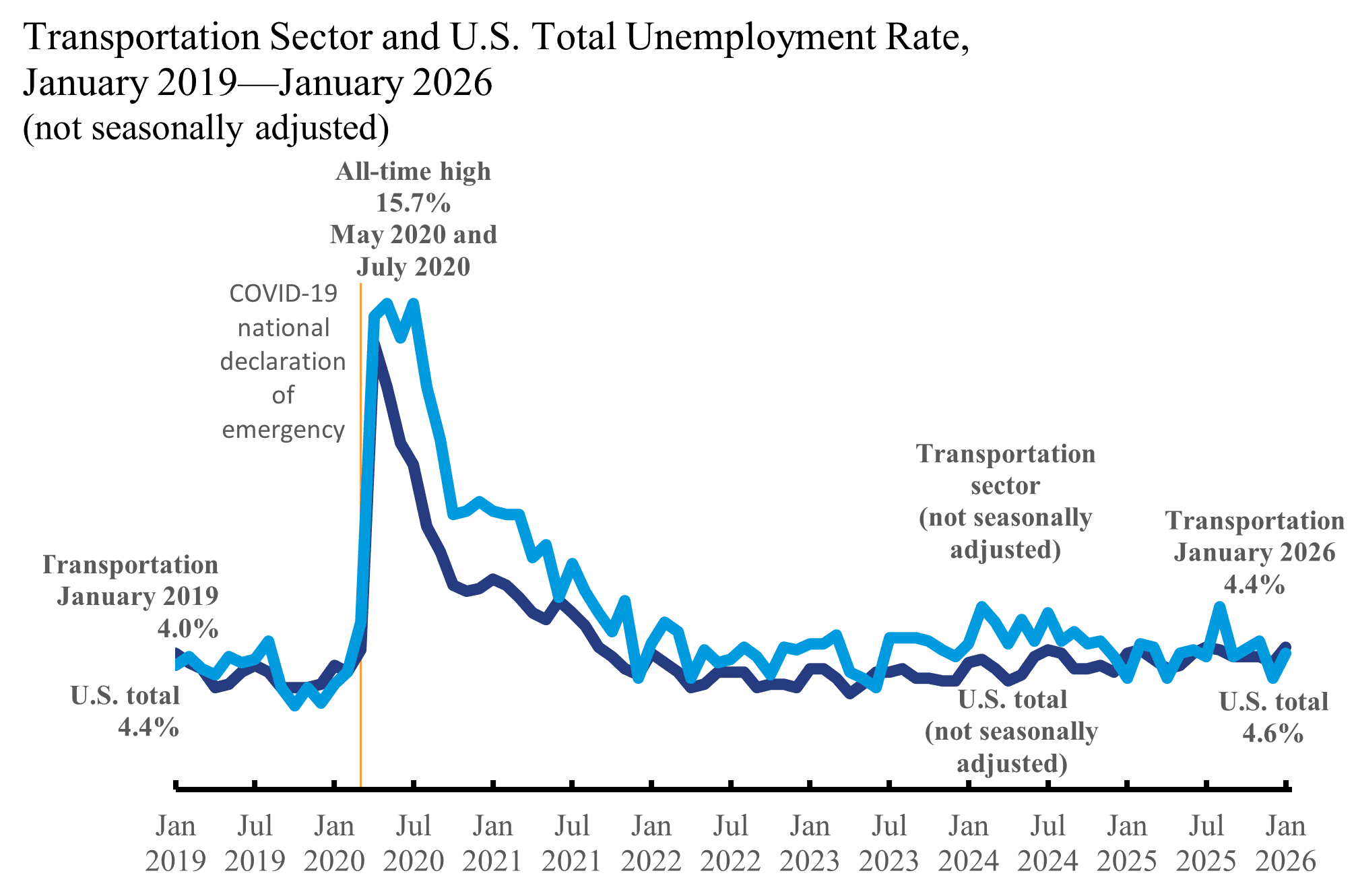
The chart tied to this post comes from a Bureau of Transportation Statistics release published on February 11, 2026, showing unemployment conditions through January 2026. It reflects the broader early-2026 reality: the market looks steady on paper while still feeling difficult to break into.
Why traditional job-search volume starts to fail
In this environment, traditional job search strategies start to lose effectiveness. Applying to hundreds of roles manually often leads to burnout, not better results.
Many listings are stale, oversaturated, or already moving through internal pipelines before most applicants ever see them.
Why passive discovery matters more
The smarter strategy is passive discovery. Instead of chasing every listing, you position yourself so opportunities can find you when the right combination of skill and timing appears.
That means keeping a profile visible, continuously matchable, and updated in ways that reflect current demand signals.
How Aladdin fits a flatter market
Aladdin’s matching engine is built for exactly this kind of environment. Rather than relying only on active applications, it keeps candidates circulating inside the system so they can surface when new roles appear or when recruiters search for specific skill combinations.
In a flat market, visibility beats volume. You do not need to apply more. You need to be found better.
- Focus on discoverability, not just application count.
- Keep your profile current enough to match emerging demand.
- Avoid spending energy on stale or overrun listings.
- Let matching quality replace brute-force volume.